Is the law always a vehicle for justice, or does it often reflect power.
As a sophomore at Stony Brook University, I once failed my history class. It was my very first semester at Stony and also the very first six months of living in the United States. With my lack of English, I was not able to understand the subjects and that unfortunate fact had led me to my first and only F.
Egor to have an academic comeback, I re-enrolled history class after a year, which was the beginning of my sophomore year. This time it was different. Due to my advanced English skills, I was able to understand most of the subjects that were taught in class. Then, when I was listening to the lecture, something caught my eye.
As attending law school and eventually becoming a lawyer is my main goal, I am interested in the field of law. And I think that history and law are the two things that are inseparable. Law is not static but constantly shaped by the time in which it exists, making it impossible to understand law without the historical context that records and defines it.
To the majority of people, Law is considered as the most objective tool that is used for social justice. We tend to look at the law itself to make a fair judgement regardless of individual emotions or interests with the principle of ‘ all individuals are equal before the law’. However, historically in many cases, law has served to reflect and reinforce the power structures and dominant ideologies of its time, far from ‘justice’.
And this happened in the case back in 1857 in the trial of Dred Scott.
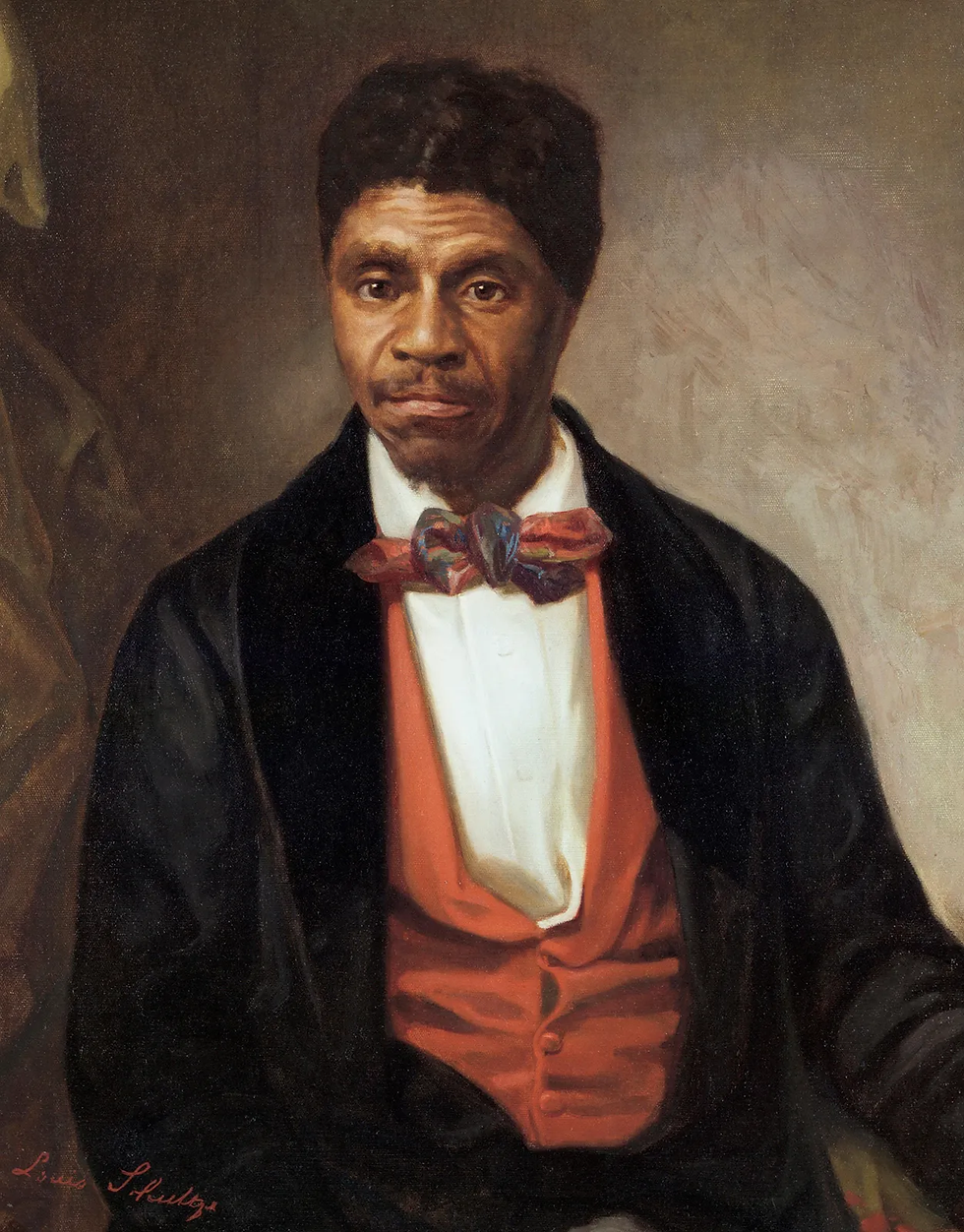
It was back in the time where the United States was divided into two different parts. The South part were mostly pro -slave states and the North part were the opposite. In this historical situation, a black man named Dred Scott claimed for his freedom to the United states supreme court. He lived in the free territory for a while and it made him sue for his
freedom. However, in this case, the U.S supreme court ruled that people with black ethnicity are not a U.S citizen, thus does not have proper rights to sue. Also, they mentioned that slave is private equity, therefore the United States federal government cannot restrain the slavery due to the constitutional law. While the decision was framed in legal logic, its underlying purpose was to justify the vested interests of the white Southern elite in maintaining slavery.
The important thing is that this judgement was considered ‘unethical’, even at that time period. It concludes that the essential problem was not that the standard of justice was absent, but the fact that law ignored it. As I mentioned before, law might be a neutral tool, but in reality, it can be different depending on who made or interpreted it. The decision of Dred Scott shows us that law can be used to preserve the existing power order rather than protecting the weak.
Then does this Dred Scott incident mean that the law itself is fundamentally unjust? Not most necessarily. In the same American historical context, the constitutional amendments adopted after the Civil War, along with later civil rights rulings, dismantled previously unjust legal frameworks and moved the law closer to justice. This indicates that law is not a fixed entity but one that is continually reconstructed through shifts in social values and power relations.
Therefore, the main question should be ‘Is it possible to make the law just?’. Law itself does not guarantee justice. It becomes closer to justice with individual choice, political struggle, and endeavour. The decision of Dred Scott is both a warning that law can be used as a force of preserving the existing power and reason for us to have a criticizing sight for it. Justice


댓글